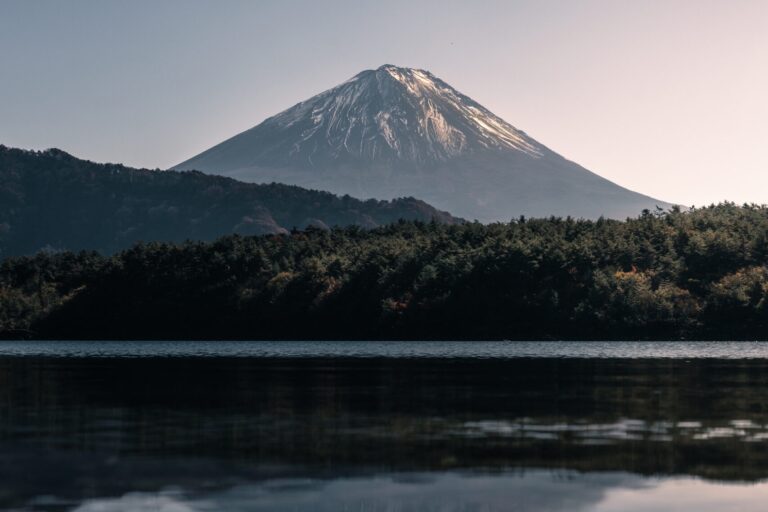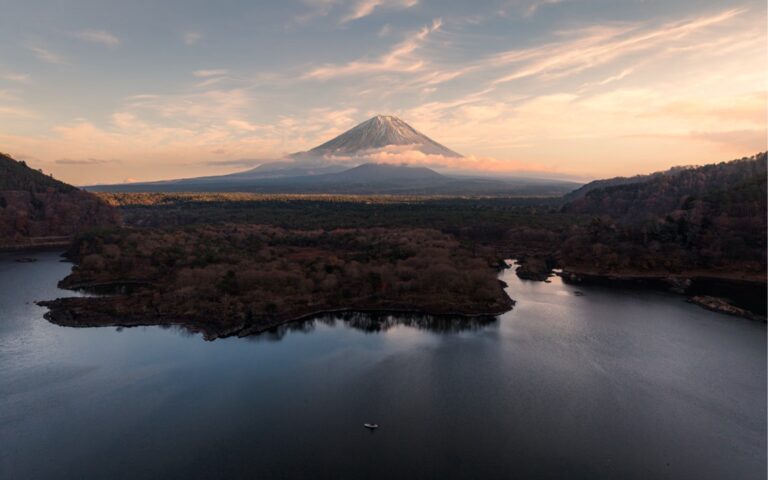
Autumn is one of the most beautiful times of year around Mt. Fuji. The air turns crisp and clear, the first snow appears on the summit, and the lakeshores below glow red, orange and gold. If you are visiting Japan in October or November, the Fuji Five Lakes area is one of the best places to see autumn leaves with Japan’s most famous mountain behind them.
As local guides in Kawaguchiko, we put together this guide to help you plan: when the colours peak, the best places to see them, and a few tips to make the most of your day.
When do the leaves change around Mt. Fuji?
Autumn colours arrive here a little earlier than in Tokyo, because the lakes sit at around 850 m above sea level. The colours also move down the mountain over several weeks, so there is something to see for most of the season.
| Timing | What to see |
|---|---|
| Late September – mid-October | Round kochia bushes turn bright red at Oishi Park on Lake Kawaguchi. The first snow usually dusts Fuji’s summit around this time. |
| Mid – late October | Larch forests on the higher slopes of Mt. Fuji turn golden yellow. |
| Early – mid November | Peak season for the maples around Lake Kawaguchi and the other lakes. |
| Mid – late November | Colours linger at lower spots such as Chureito Pagoda before winter arrives. |
Peak timing changes by about a week from year to year, depending on the weather. If you are travelling in early to mid November, you have the best chance of catching the maples at their brightest.
The best autumn leaves spots around Mt. Fuji
1. Momiji Corridor, Lake Kawaguchi
The Momiji Corridor (Momiji Kairo) on the north shore of Lake Kawaguchi is the most famous autumn leaves spot in the area. A small stream runs under a tunnel of tall maple trees that turn deep red at their peak. During the Fuji Kawaguchiko Autumn Leaves Festival, usually held from late October to late November, the maples are lit up in the evening and food stalls line the path. Check the official festival website for this year’s dates.
2. Momiji Tunnel, Lake Kawaguchi
Close by on the same shore, a lakeside road passes under maples that form a colourful tunnel, with views across the water to Mt. Fuji. It is quieter than the Momiji Corridor and a lovely place for a short walk.
3. Chureito Pagoda, Fujiyoshida
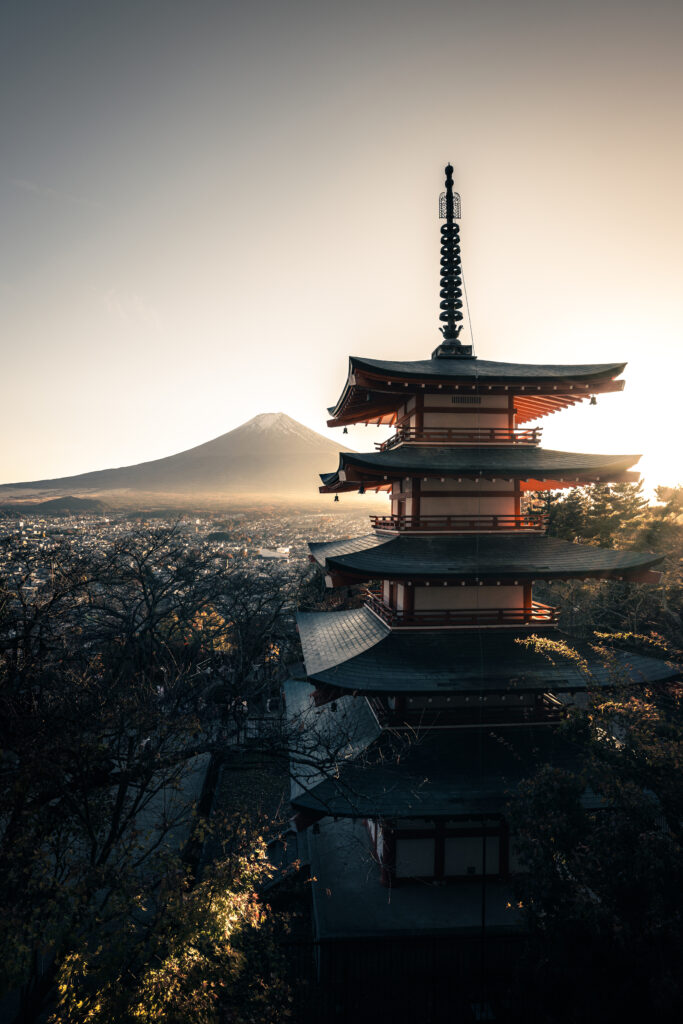
The view of the five-storey Chureito Pagoda with Mt. Fuji behind it is one of the most photographed scenes in Japan. In autumn, the trees around the pagoda turn red and orange, usually a little later than around the lakes. Reaching the viewing platform means climbing almost 400 steps, so wear comfortable shoes.
4. Lake Saiko and Saiko Iyashi-no-Sato
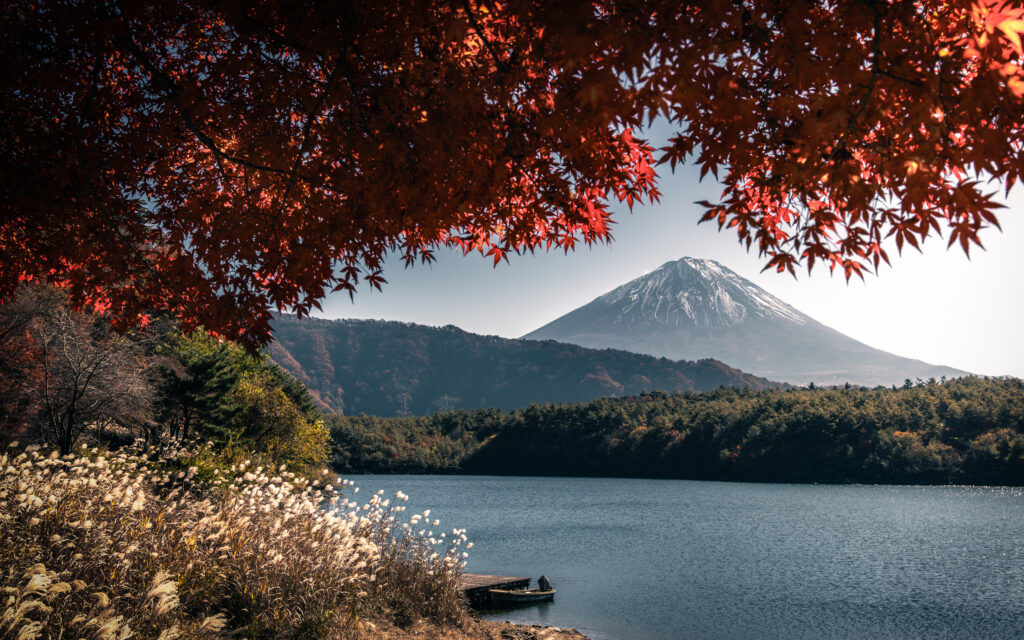
The quieter western lakes are wonderful in autumn. At Saiko Iyashi-no-Sato, a restored village of thatched-roof houses, maple leaves and Mt. Fuji come together in a scene that feels like old Japan. The lakeshores here are also lined with pampas grass that glows in the afternoon light.
5. Oishi Park, Lake Kawaguchi
Oishi Park is the place to start the season. From late September to mid-October, its round kochia bushes turn from green to bright red, with the lake and Mt. Fuji behind them. Later in autumn, the park’s flower gardens give way to warm autumn tones.
6. Panorama-dai, above Lake Yamanaka
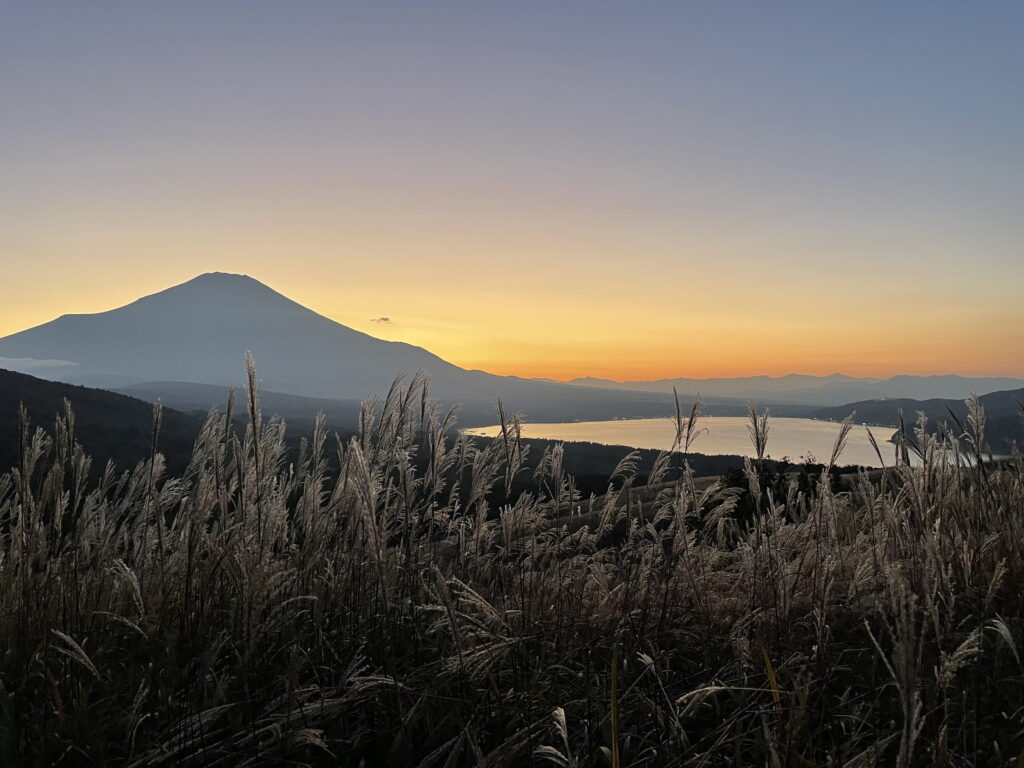
This viewpoint looks over Lake Yamanaka to Mt. Fuji. In autumn, fields of pampas grass turn silver and gold, and at sunset the whole hillside seems to glow. It is a short walk from the parking area and a favourite spot for photos.
Tips for seeing the autumn leaves
- Go early: Mt. Fuji is usually clearest in the morning, and on calm days you may see the colours and the mountain reflected in the lakes.
- Avoid the busiest times if you can: the Momiji Corridor is very popular, especially on weekends and during the evening light-up, and roads around Lake Kawaguchi can get busy. Visiting on a weekday, or early in the day, makes a big difference.
- Dress in layers: November mornings are often close to freezing, while afternoons can feel mild in the sun. Bring a warm jacket for evenings.
- Frame Mt. Fuji with leaves: step back and use overhanging branches to frame the mountain. Red maples against a snow-capped Fuji make the most striking photos.
- Combine the colours: kochia, golden larch, red maples and pampas grass peak at different times, so most autumn trips include more than one kind of colour.
See the autumn leaves with a local guide
Autumn colours change week by week and spot by spot, and the best place to see Mt. Fuji can change hour by hour. On a private tour, your guide checks where the leaves are at their best and where Fuji is clear, then plans your day around both, including quieter spots away from the crowds.
Want to know what Mt. Fuji is like in other seasons? Read our guide to Mt. Fuji through the four seasons. When you are ready to plan your trip, take a look at our sample tour routes and tour prices, or message us on WhatsApp with your dates.