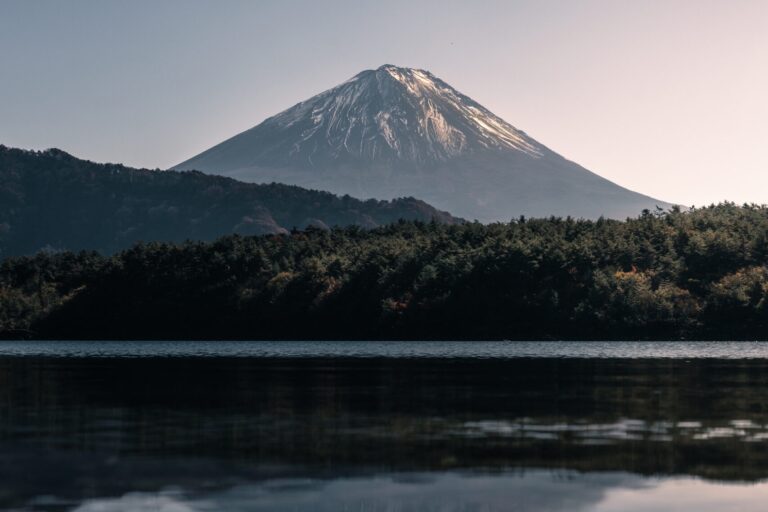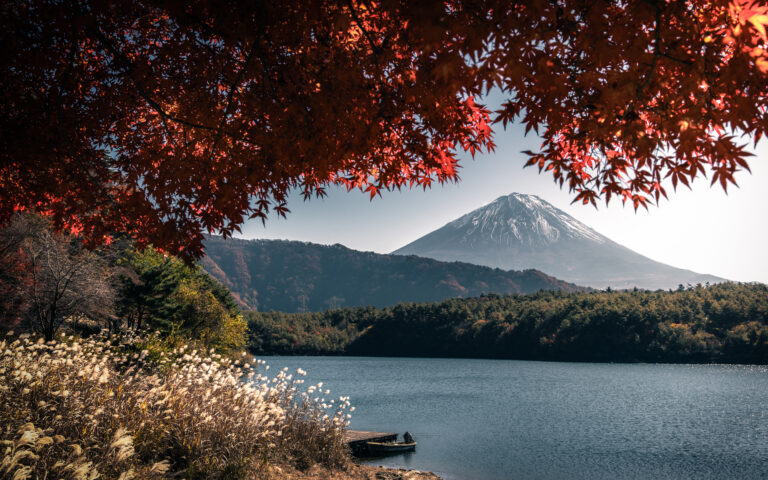
Mt. Fuji never looks the same twice. In winter it stands sharp and snow-white against a deep blue sky. In spring it rises above pink cherry blossoms, and in autumn above red and gold leaves. In summer it often plays hide-and-seek behind the clouds.
As local guides based in Kawaguchiko, the question we hear most is: “When is the best time to see Mt. Fuji?” The short answer is winter, for the clearest views. But every season has its own magic. This guide explains what to expect month by month, so you can choose the trip that suits you.
Mt. Fuji by season at a glance
| Season | Months | Chance of a clear view | Highlights |
|---|---|---|---|
| Spring | March–May | Good, sometimes hazy | Cherry blossoms, pink moss phlox, snow-capped peak |
| Summer | June–August | Lowest of the year | Lavender, green forests, cool lava caves, climbing season |
| Autumn | September–November | Good and improving | First snowcap, autumn leaves, red kochia bushes |
| Winter | December–February | Best of the year | Fully snow-covered Fuji, crisp air, winter festivals |
Spring (March–May): cherry blossoms and a snowy summit
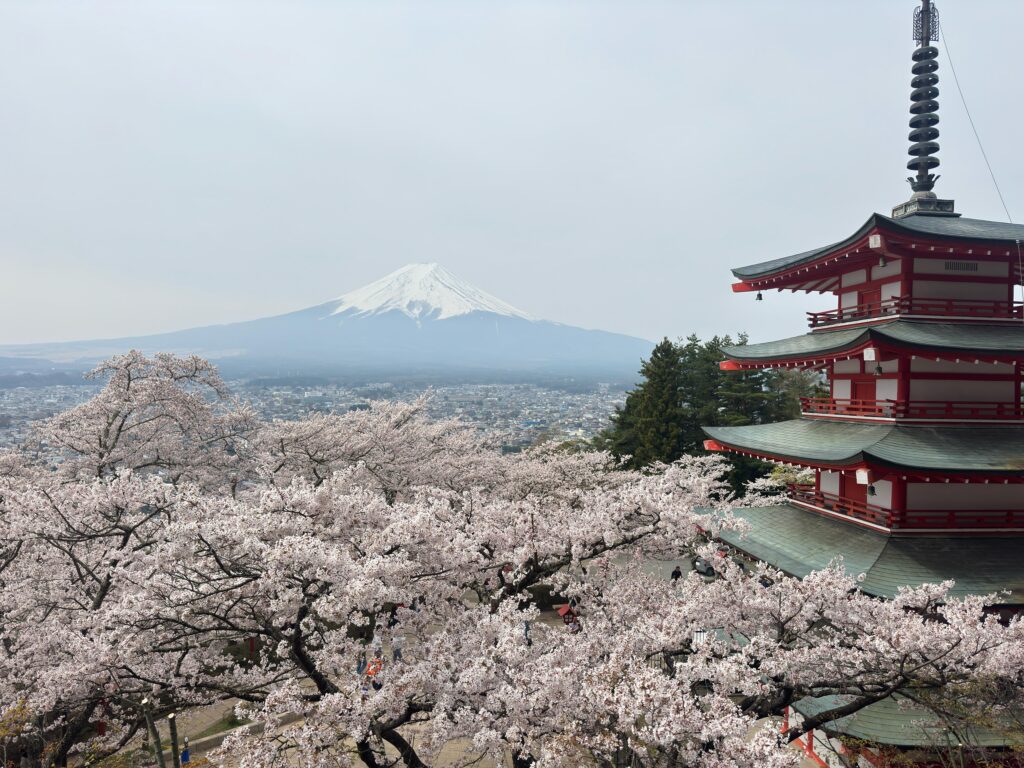
Spring is many people’s favourite season around Mt. Fuji, because you get two classic views at once: a snow-capped peak and blossoms in the foreground.
- Cherry blossoms: the Fuji Five Lakes area sits at about 850 m, so the blossoms usually open a little later than in Tokyo, often in early to mid April. The view of Chureito Pagoda with cherry blossoms and Fuji is one of the most famous in Japan.
- Pink moss phlox: from late April into May, fields of shibazakura near Lake Motosu turn bright pink.
- Snow on the peak: Fuji usually keeps its white cap through spring, which makes for great photos.
Good to know: spring haze can soften the view later in the day, so mornings are usually best. Days are mild, but mornings can be chilly, so bring a light jacket.
Summer (June–August): green forests, lavender and cool caves
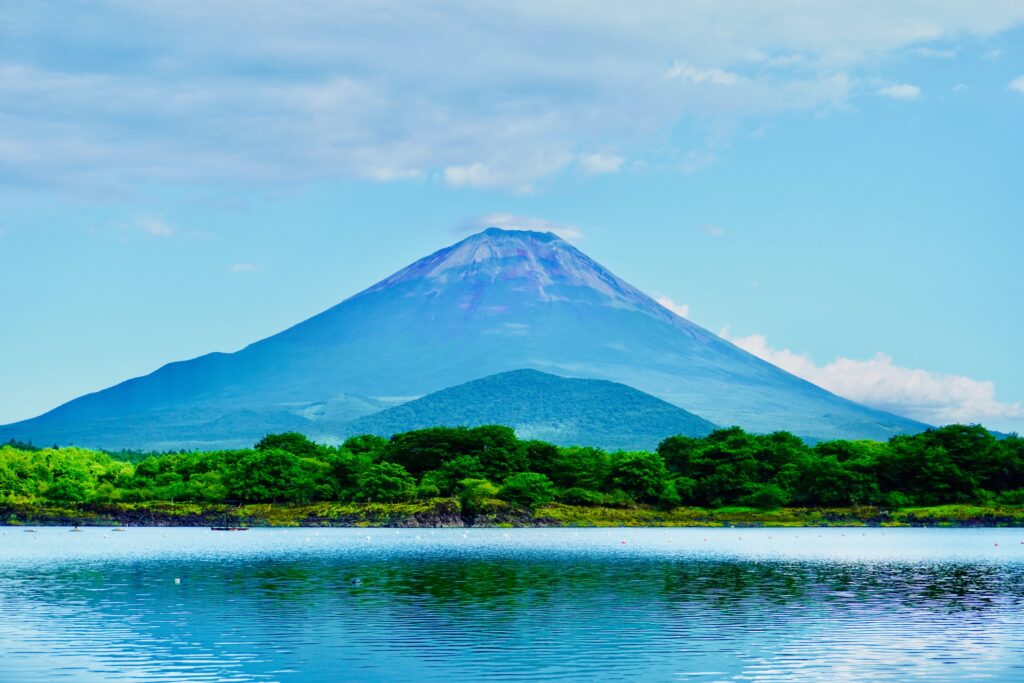
To be honest, summer is the hardest season to see Mt. Fuji clearly. The rainy season usually runs from June to mid-July, and the humid air often hides the mountain behind clouds by late morning. Your best chance is early in the day, when you may be rewarded with a view like the one below.
Summer still has a lot to offer:
- Cooler than Tokyo: the lakes area is noticeably cooler than the city, which makes it a pleasant escape from the summer heat.
- Lavender: from late June into July, lavender blooms along the north shore of Lake Kawaguchi.
- Forests and caves: the deep green Aokigahara forest and its lava caves are at their most atmospheric, and the caves stay cool all year.
- Climbing season: the official trails to the summit open in summer, usually from July to early September. Climbing rules, fees and reservations have changed in recent years, so check the official information before you go.
Good to know: start early, pack a light rain jacket, and stay flexible. On a private tour, your guide can watch the clouds and head to wherever Fuji is showing.
Autumn (September–November): the first snow and fiery colours
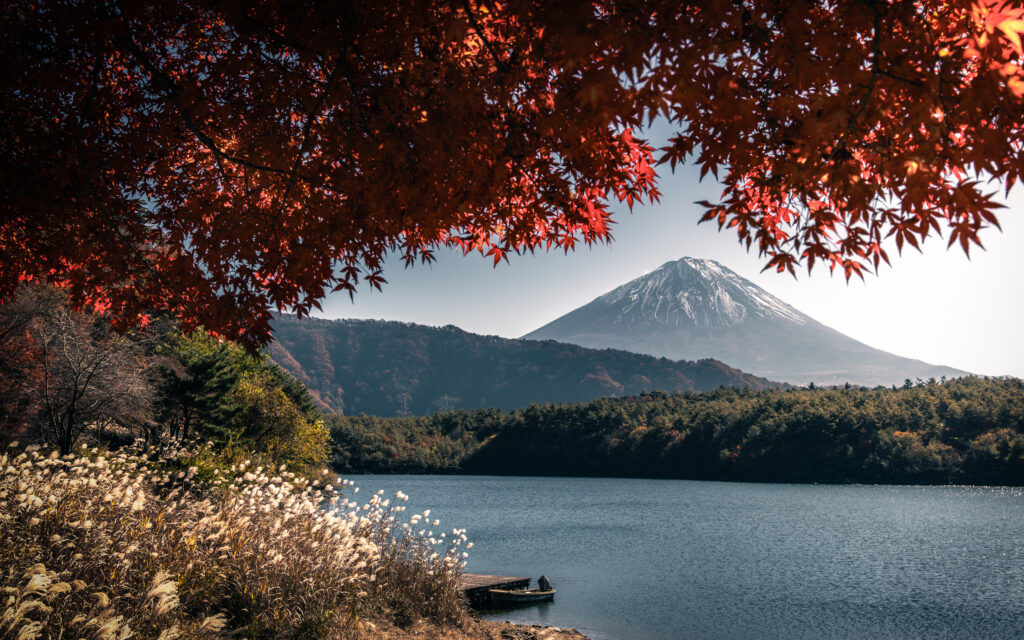
As the air cools, the haze clears and the views get better week by week. Autumn is a wonderful time to visit.
- The first snowcap: the first snow usually dusts the summit around late September or October. It is a moment locals look forward to every year.
- Red kochia: in late September and October, the round kochia bushes at Oishi Park on Lake Kawaguchi turn from green to bright red.
- Autumn leaves: the maple trees around Lake Kawaguchi usually peak in early to mid November. The famous Momiji Corridor, a tunnel of maple trees on the north shore, is a highlight.
- Pampas grass: silver and gold pampas grass lines the lakeshores and fields, glowing in the late-afternoon light.
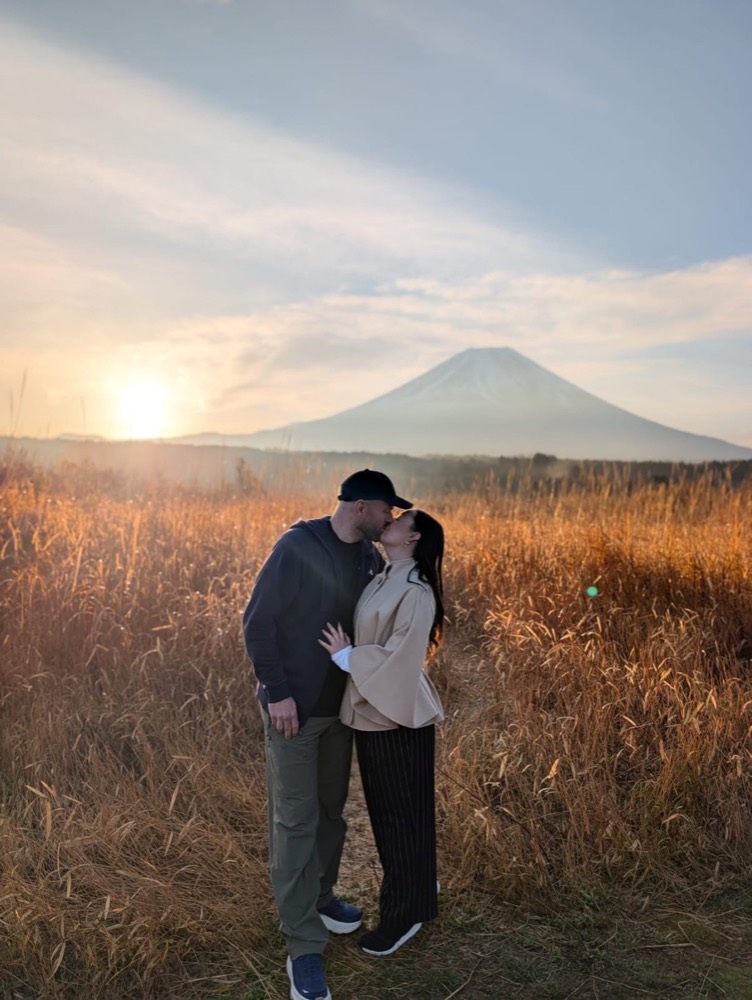
Good to know: dress in layers. September can still feel like summer, but by November mornings are cold.
Winter (December–February): the clearest views of the year
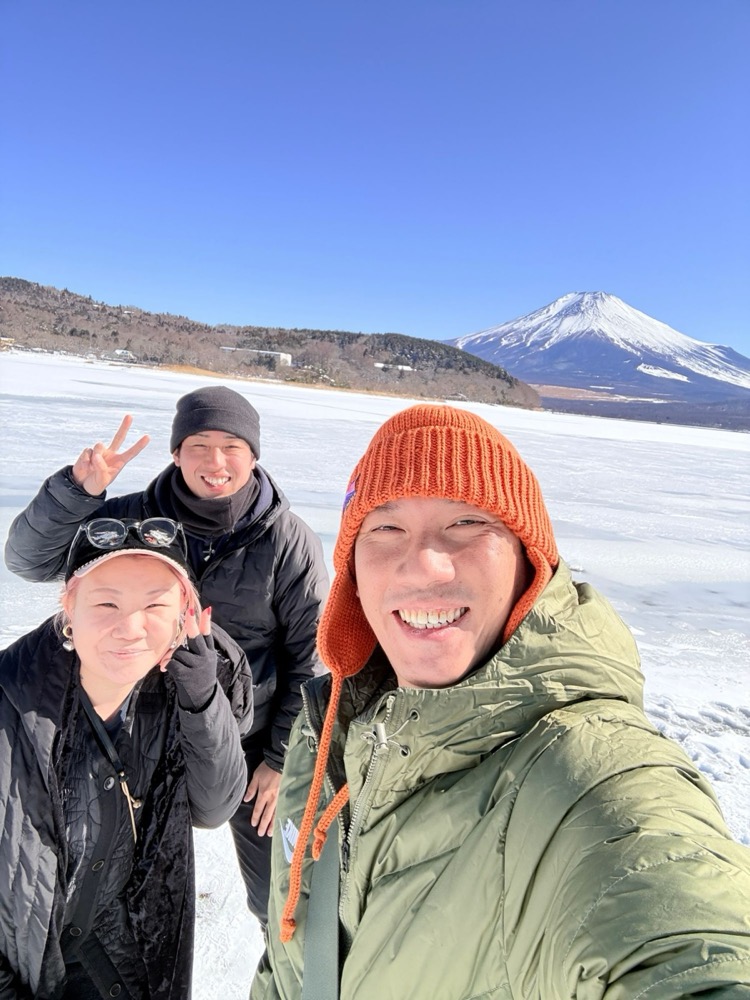
If seeing Mt. Fuji clearly is your top priority, come in winter. The air is dry and crisp, the skies are often clear all day, and the mountain is covered in snow from the summit far down its slopes.
- Picture-perfect Fuji: this is when you get the iconic, sharply outlined, snow-white mountain.
- Diamond Fuji: around Lake Yamanaka, on certain days in late autumn and winter the setting sun lines up exactly with the summit and makes it sparkle like a diamond.
- Frozen scenery and festivals: parts of the lakes can freeze on the coldest days, and the area holds winter events such as fireworks and ice festivals.
Good to know: it is cold. Mornings are often well below freezing, so bring a warm coat, hat and gloves. Roads can be icy after snow, so it helps to travel with someone who knows the local conditions.
So, when should you visit?
- For the clearest views: December to February.
- For blossoms with a snowy peak: April to May.
- For autumn colours: late October to November.
- For green forests and a cool escape: June to August, as long as you are flexible about the view.
- Whatever the season: go early in the morning. Fuji is usually most visible soon after sunrise, before clouds build up.
How we plan around the weather
Around Mt. Fuji, the weather can change from hour to hour, and the mountain can be clear on one side of a lake and hidden on the other. That is why our tours have no fixed timetable. Each morning our guides check the clouds and plan the route around the places with the best chance of a clear view. If Fuji does decide to hide, the forests, lakes, shrines and villages around it are beautiful in any weather.
Want to see Mt. Fuji in your favourite season? Take a look at our sample tour routes and tour prices, or message us on WhatsApp with your travel dates. We’d love to show you around.